First Aid for Baby Seizures



     The child has a high fever is often accompanied by the emergence of seizures or known as the step. Febrile seizures usually occur in children aged 6 months to 5 years.

     The symptoms are the body jerks and starts stiff, drooling, vomiting, skin looks a little darker even a child to lose consciousness. Convulsions may occur within a few seconds to a minute, but in some cases seizures can appear very long to 15 minutes.

     In most cases, febrile seizures that occurred a few seconds generally harmless. But if it lasts long, repetitive and no immediate relief would cause harm such as brain damage or early symptoms of serious illness.

Some steps that parents can do if their child had a febrile seizure, namely:

1. Move the child to a safe place such as the floor or bed and away from dangerous objects.

2. Tilt your head to one side so he would not choke and facilitate discharge of saliva or vomit.

3. Loosen clothing used so that children do not experience shortness of breath.

4. Do not put or insert anything into the mouth during a seizure takes place, including giving medications.

5. If a child is difficult breathing or bluish skin immediately brought to the hospital or call an ambulance.


First Aid for Adult Choking


     Each person must have had a choking when eating or drinking something that could make it difficult to cough and to breathe. And breathing is one very important part of life for all humanity.

     The body had choked due to obstruction of the upper respiratory tract caused by food or other foreign objects that obstruct a person's breathing and make shortness of breath. Choking can cause a person to experience coughing, but if the airway is obstructed enough it can cause a person's death.

First aid can be done when people choke are:

1. Ask if he was choking on something, if it can still be answered clearly enough accompany the course. But if you can not answer these questions immediately provide relief.

2. Do not give any beverages, because the fluid can block incoming air.

3. Stand behind the person and put our arms around the belly, make a fist with one hand and thumb against the stomach while the other hand holding a fist.

4. With a sharp motion press arms up and into the stomach to remove foreign objects from the body.

5. A pat on the back or chest bone can cause coughing and remove the object. Foreign bodies should be removed from the hypopharynx or laryngopharynx, because it is part of the throat that connects to the esophagus.

6. If the foreign body can not be removed from the body, immediately bolt to the hospital, before they run out of breath.

First Aid for Heart Attack


     A heart attack is still a frightening disease. Many people thought it would be difficult to survive if a heart attack due to the handling of the seconds are so valuable. There are several things that can be used to provide first aid to people who had a heart attack.

If someone is experiencing symptoms of a heart attack, it can do the following:

1. Sit or lie down. Stop all activity and do not do a lot of movement. Many moves can exacerbate damage to the body caused by heart attack.

2. Phone emergency number for help. Immediately contact the nearest hospital or ask someone else to call the ambulance. Do not waste time to get the phone's personal physician, friend or other family members.

3. If your doctor has given nitroglycerin tablets, immediately taking the drug. The drug can be taken every 5 minutes once a tablet until the pain is gone. Do not consume if not given nitroglycerin tablets doctor.

4. Chewing aspirin origin does not have allergies. Aspirin will inhibit blood clotting and helps keep blood flowing to the artery. Chewing aspirin during a heart attack can reduce the risk of death by 25 percent.

5. Know the signs of heart attack and always take drugs iberikan doctor. Rapid relief can prevent serious damage to the heart and allows the patient to survive.

First Aid for Baby Choking


     Children under 3 years of age loves to put something in your mouth because that's where they got the satisfaction. Negative effects, infant choking risk.

     Choking occurs when a foreign object entering and inhibits the respiratory system so that the child choked. Any object whose size can get into the child's mouth is likely swallowed and lodged in the respiratory flow and cause choking.

     When choking, the child usually signaled by putting his hand on the neck. Other signs that may accompany the others are unable to speak, difficult breathing or breathing sound, can not cough, skin blackened lips and then lost consciousness or fainting.

Babies choke should immediately get help, as follows:

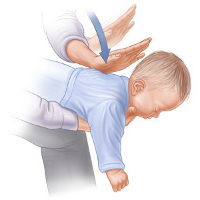
1. Put the baby in the tummy in the arm with the baby's head is lower than or chest.

2. Support the baby's head with the palm of the hand. Do not cover the baby's mouth or pressing or neck.

3. Use the heel of one hand to pat the baby's back 5 times, right between the shoulder blades baby.

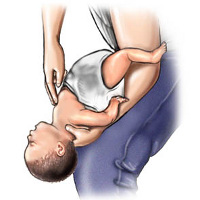
4. If the objects that cause choking are not well off, prop the baby's head and change his position to be flat on the thigh. Keep your baby's head lower than its body.

5. Give up to 5 times the pressure quickly to the sternum below the nipple baby using 2-3 fingers.

6. Continue to give 5 and 5 pats back pressure on the chest until the object out.

7. If the baby is unconscious, call an ambulance or take it to the nearest hospital.


First Aid in Patients with Asthma


     Asthma occurs due to inflammation of the airways due to too responsive to a stimulus. As a result, the airways become narrow and exacerbated by mucus. Patients will find it difficult to breathe, especially when exhaling.

     Asthma can be caused by allergies and psychological pressure. The signs are visible difficulty breathing with periods of long exhale. Sometimes accompanied by wheezing when you exhale, anxious, pale skin and blue, and if left unchecked can lead to fainting.

     According to Stanley M. Zildo as quoted from his book 'First Aid, How to Properly Handling First Aid and Emergency', requiring immediate treatment because asthma can be dangerous.

The steps that can be done include:

1. Reassure the patient

2. Bantu people to sit and rest

3. Bantu people get or find a cure

4. Let people use their own drug inhalernya

5. Avoid sources of allergy sufferers

6. If it is a first attack or seen a prolonged, immediately take medical services

7. If unconscious, immediately take it to the medical service

8. Do not force the patient to sleep on her back because people sit more comfortably in a state

9. Do not ask many questions in people, because usually it is difficult to speak

First Aid If Stung by Bees


     Injury from bee stings usually cause local reactions such as redness or swelling. However, if the victim is allergic to certain insect stings, then this can be life-threatening and requires immediate assistance.

     Harmful insects that have stingers are honey bees, ticks buffalo, wasps and fire ants. According to Stanley M. Zildo as quoted from his book 'First Aid, How to Properly Handling First Aid and Emergency', the dangerous symptoms of insect stings can be painful, swollen and red, itchy, and a sting or insect bite is hot.

Some of the actions that can be done immediately, namely:

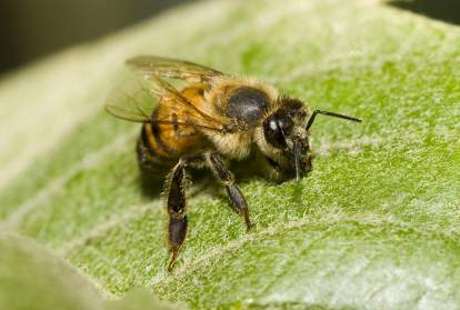
1. By the time a honey bee stings, bee sting baisanya still stuck. Unplug sting carefully use a knife or a nail. Do not push because it can cause toxins to grow inside.

2. Wash sting area with soap and water.

3. Compress with cold water or ice to reduce the absorption and spread of venom.

4. Apply creams or lotions such as calamine, baking soda plus a little pasta water to reduce discomfort.

First Aid For Victims was Electrocuted


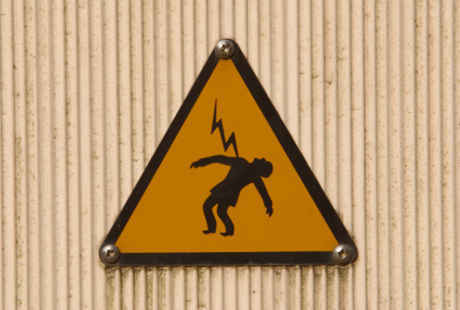
     High voltage power could be dangerous and fatal if the body. When I first saw people who were electrocuted, should be calm but wary. Do not touch the victim when the power is still on because the risk of shock was also

     According to Stanley M. Zildo as quoted from his book 'First Aid, How to Properly Handling First Aid and Emergency', there are some things you can do to minimize the risk of harm to the victim an electric shock.

The things that can be done to see if the victim was electrocuted, among others:

1. If possible, turn off the power source or dispatch someone else to turn it off.

2. It is important to move the victim with care. Wear pad dry as paper, cardboard, blankets, rubber mat or dry clothes.

3. Do not use materials from iron and wet materials. Do not touch the victim until he is free of the sting.

4. If victim is not breathing, open airways and do CPR, how that is:


  • Make sure the victim is placed on a flat surface. Clean the mouth and airway of vomit or fluids.
  • Tengadahkan the victim's head by placing your palms on the forehead and the other fingers pushing up the chin victims
  • Victim nose pinch using the thumb, then take a deep breath. Put your mouth on the victim's mouth open, inflatable quickly 2 times.
  • Stop blowing when the victim's chest is expanded. Remove the mouth of the victim's mouth, then hold your ear to hear the victim's nose breath.
  • Note the victim's chest, is there any movement up and down the sign he was breathing.
  • Repeat this procedure breaths until the victim can actually breathe on their own.